














Table of Contents
- How Much Does It Cost to Build a Chicken Coop? Buying vs. Building (2026)
- The Hidden Costs of Building Your Own Chicken Coop
- What About Buying a Prefab Chicken Coop?
- How to Choose the Right Chicken Coop for Your Flock
- Is It Cheaper to Build or Buy a Chicken Coop?
- Buying vs. Building: Which Is Right for You?
- FAQs
How Much Does It Cost to Build a Chicken Coop? Buying vs. Building (2026)
If you're planning to raise backyard chickens, one of the first decisions you'll face is whether to buy a chicken coop or build one yourself. But how much does it cost to build a chicken coop, and is DIY actually the cheaper option?
At first glance, building your own coop might seem like an easy way to save money. But once you factor in lumber, hardware, tools, and the time it takes to put everything together, the total might surprise you.
For a backyard flock of 4 to 10 chickens, a DIY coop with an attached run can cost approximately $420 to $1,360 in materials alone, based on our estimated 2026 retail costs. And that's before accounting for your time.
A simple DIY coop takes about 8 hours, and a larger coop with a secure run can take 30 or more, often stretching across several weekends. Our ready-to-assemble kits arrive pre-drilled and labeled, with the hardware cloth already installed, and go together in about 1 to 3 hours with a power screwdriver. Once you count your time, buying saves most backyard keepers about $650 to $800 and 10 to 20 hours.
So, is building really worth the savings? Let's compare the costs, construction time, and what you're actually getting for your money.
Buying vs. Building: Chicken Coop Cost Comparison
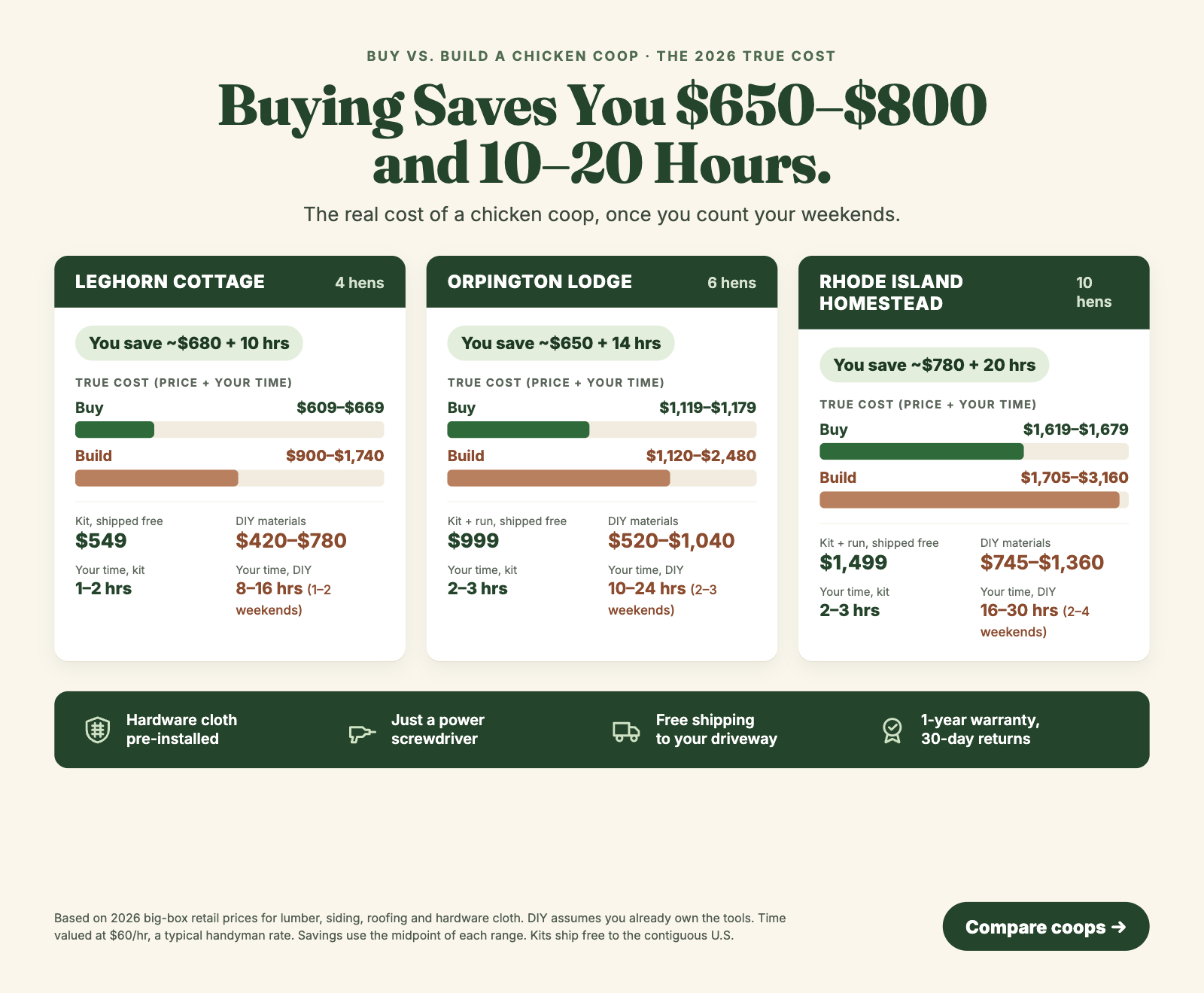
The numbers above compare three different flock sizes, from a small backyard setup for four hens to a larger coop and run for ten.
Our DIY estimates include common building materials such as lumber, siding, roofing, hardware cloth, screws, hinges, and latches. They assume you already own the necessary tools.
"True cost” adds your time at $60 an hour, a typical handyman rate. It’s what you’d pay someone else to build it, or what a weekend of your own time is worth.
The takeaway? DIY lumber can come in under a kit’s price for larger coops, but the hours erase those savings at every flock size. For a small flock, our Leghorn Cottage costs about the same as the DIY materials alone.
And there's more to consider than the initial price.
The Hidden Costs of Building Your Own Chicken Coop
There's something satisfying about building a project from scratch, especially when that project will eventually be home to your backyard flock.
But if you've ever started a DIY project thinking it would be quick and inexpensive, you probably know how easily those plans can change.
Here are a few costs worth considering before heading to the hardware store.
1. Lumber and Building Materials Add Up
Lumber will likely be one of your biggest expenses.
You'll need framing materials, siding, flooring, roofing, and potentially additional supports depending on your design.
Even a low-cost DIY chicken coop built with new materials can require several hundred dollars in lumber and roofing supplies alone.
And that doesn't include everything else you'll need to finish it.
You may also need exterior stain, screws, hinges, locks, ventilation openings, nesting boxes, and roosting bars.
A good way to avoid surprises is to create a complete materials list before buying anything.
2. Predator Protection Isn't Something to Cut Corners On
One of the most important parts of any chicken coop is keeping predators out.
Raccoons, foxes, weasels, and other animals can be surprisingly persistent when trying to reach your flock.
That's why we recommend ½-inch galvanized hardware cloth instead of standard chicken wire for vulnerable openings and run enclosures.
Chicken wire is useful for containing chickens, but it isn't a reliable barrier against determined predators.
Hardware cloth costs more, and properly securing it takes time. You'll also need to think about reinforced latches, gaps around doors, and protection against animals that dig.
When building your own coop, all of these details become your responsibility.
Our chicken coops are designed with predator protection in mind, including steel hardware cloth and secure door hardware. For additional ground-level protection, you can also explore our Predator Protection Kit.
3. Your Time Has Value, Too
This is probably the most overlooked expense when comparing buying versus building.
Let's say you're planning to build a chicken coop for 6 chickens.
Based on our estimates, a comparable DIY coop and run could take approximately 10 to 24 hours to construct.
That's a lot of measuring, cutting, assembling, and making adjustments.
And it assumes everything goes according to plan.
If you're an experienced builder who enjoys woodworking, those hours might be part of the fun.
But if you're a busy parent, a first-time chicken keeper, or someone who would rather spend the weekend enjoying your backyard, it's worth considering how much time you're willing to invest.
Our ready-to-assemble coops go together in about 1 to 3 hours with a power screwdriver. No cutting, no framing, and no carpentry experience needed.
Instead of spending multiple weekends building a chicken coop, you could be getting your flock settled into its new home.
4. Don't Forget About Tools
If you already have a well-stocked workshop, this might not be a major concern.
But if you're starting from scratch, you'll likely need more than a drill.
Depending on your chicken coop plans, building a coop may require a saw, measuring tools, staple gun, drill, and other cutting or fastening equipment.
These purchases can quickly add to the overall cost.
With a Chicken Coop Company kit, every panel arrives pre-cut, pre-drilled and labeled. A power screwdriver is the only tool you need. (Our DIY estimates above assume you already own the tools. If you don’t, add those purchases on top.)
What About Buying a Prefab Chicken Coop?
Buying is the better deal for most keepers, but not every prefab coop is worth buying.
There are inexpensive prefab chicken coops available online, but it's important to look beyond the price tag.
A cheap chicken coop may seem like a great deal until you realize it's smaller than expected, difficult to clean, or made with materials that won't hold up well in your climate.
When comparing coops, pay attention to the actual dimensions, construction materials, ventilation, predator protection, and ease of maintenance.
A few questions worth asking:
- Is there enough usable space for your flock?
- Does the coop include a run, or is that an additional purchase?
- Is the enclosure made with chicken wire or hardware cloth?
- Can you easily access the nesting boxes and clean the interior?
- What happens if a part becomes damaged or needs replacing?
These details matter much more than finding the lowest advertised price.
Why We Designed Our Chicken Coops Differently
At Chicken Coop Company, we know that most backyard chicken keepers aren't looking for another construction project.
They want a coop that's secure, practical, easy to maintain, and built to last.
That's why our coops are designed around the things chicken keepers actually need.
Predator protection: Our coops feature ½-inch steel hardware cloth and secure door hardware to help protect your flock.
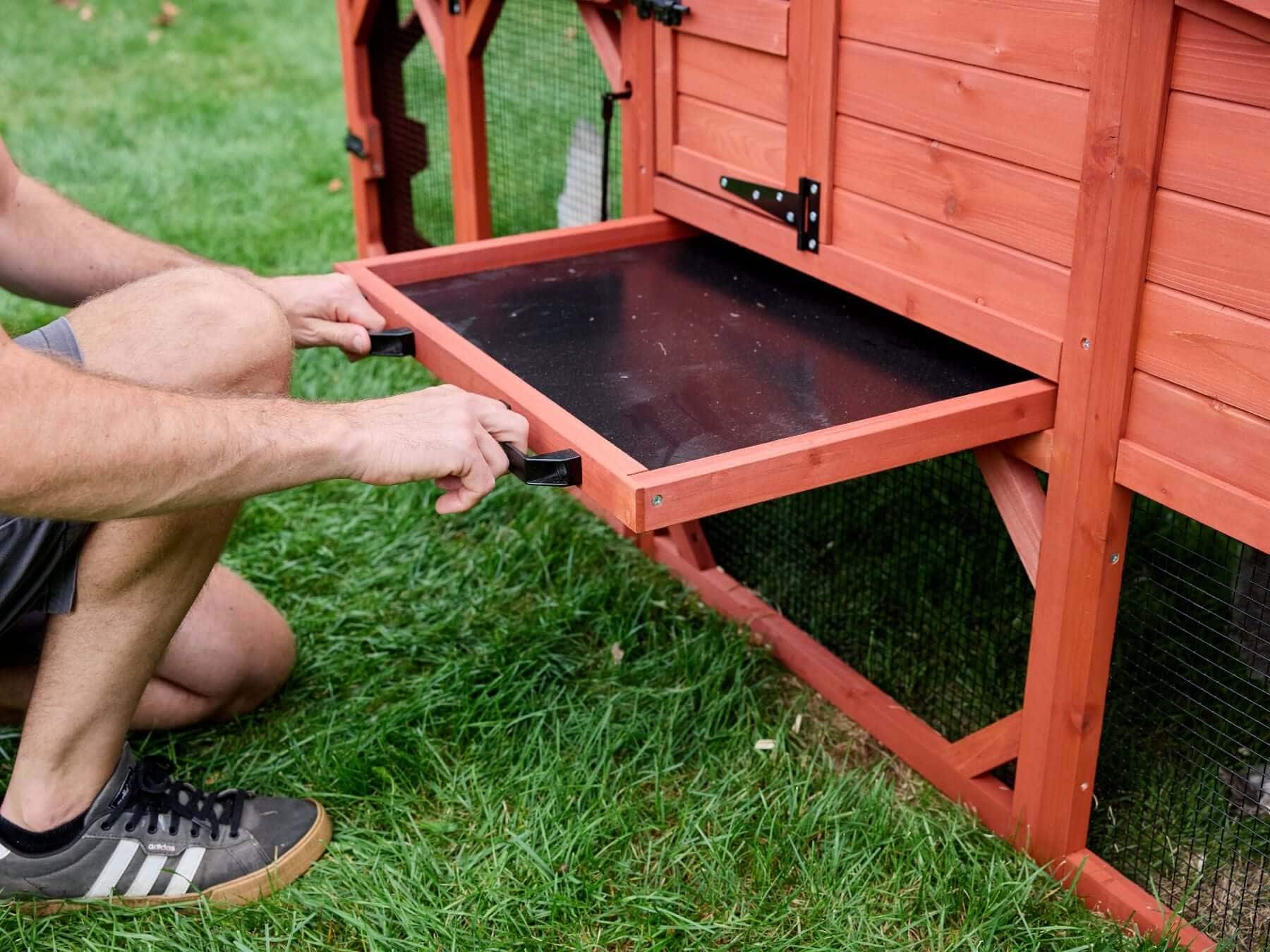
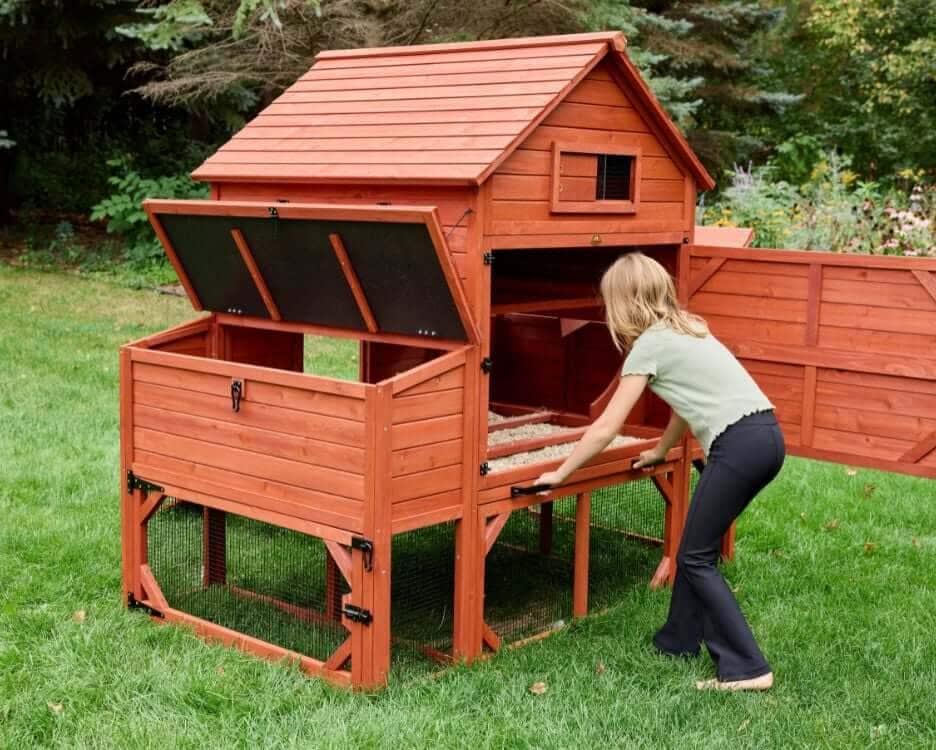
Easy cleaning: Pull-out trays and accessible nesting boxes make routine maintenance more manageable.
Practical construction: Our ready-to-assemble designs eliminate much of the measuring, cutting, and framing required with a DIY build.
Room to grow: Compatible run extensions allow you to expand your chickens' outdoor space without starting over with an entirely new setup.
Free shipping: Every coop ships free to your driveway in the contiguous U.S. We custom-pack panels to avoid oversized freight fees, so there’s no surprise delivery charge.
Replacement parts and real support: If a component needs replacing or you have questions about your setup, our team is here to help.
The goal isn't to make chicken keeping complicated. It's to help you spend less time worrying about your coop and more time enjoying your chickens.
How to Choose the Right Chicken Coop for Your Flock
Whether you're buying or building, the right coop starts with knowing how many chickens you plan to keep.
And if there's one thing backyard chicken owners learn quickly, it's that a flock has a way of growing!
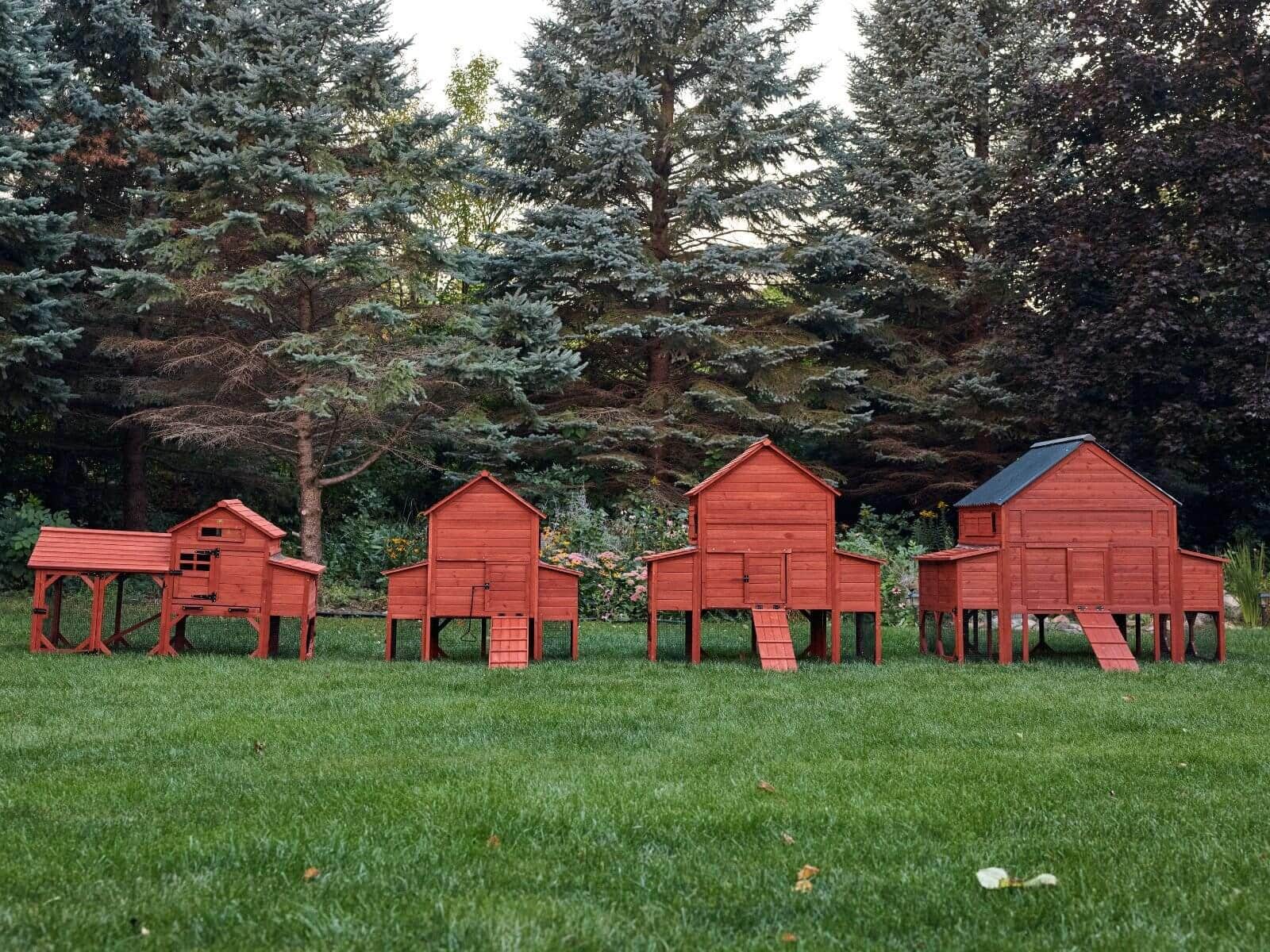
Here are three options worth considering.
Leghorn Cottage: For Smaller Backyard Flocks
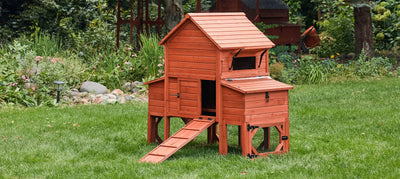
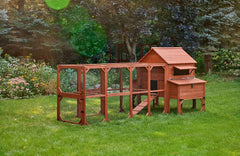
If you're starting with just a few hens, the Leghorn Cottage is a practical option for a smaller backyard.
Designed for approximately four hens, it's a good starting point for families who want fresh eggs without committing to a large flock.
It's also our most affordable option in this comparison. Coop and run: $549, shipped free, and about 1 to 2 hours to assemble.
Orpington Lodge: For the Everyday Backyard Chicken Keeper
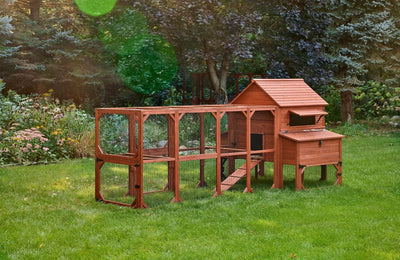
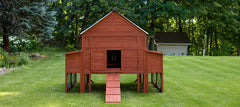
The Orpington Lodge offers a little more room for families planning to keep around six hens.
It's a good fit for suburban chicken keepers who want a manageable flock with enough birds to enjoy a regular supply of fresh eggs.
For someone comparing the cost of building a chicken coop for 6 chickens, this is a useful option to consider. Coop and run: $999, shipped free, and about 2 to 3 hours to assemble. That’s roughly $650 and 14 hours less than building a comparable coop.
Rhode Island Homestead: For a Growing Flock
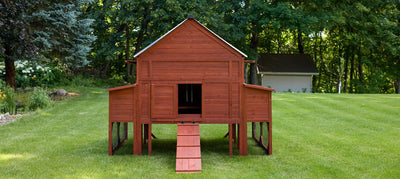
If you're planning a larger flock, the Rhode Island Homestead offers more space without requiring you to design and construct a larger coop yourself.
With room for approximately ten hens, it's an option for chicken keepers who know they'll want more than a handful of birds. Coop and run: from $1,499, shipped free, and about 2 to 3 hours to assemble.
Brahma Chicken Coop: For Larger Backyard Flocks
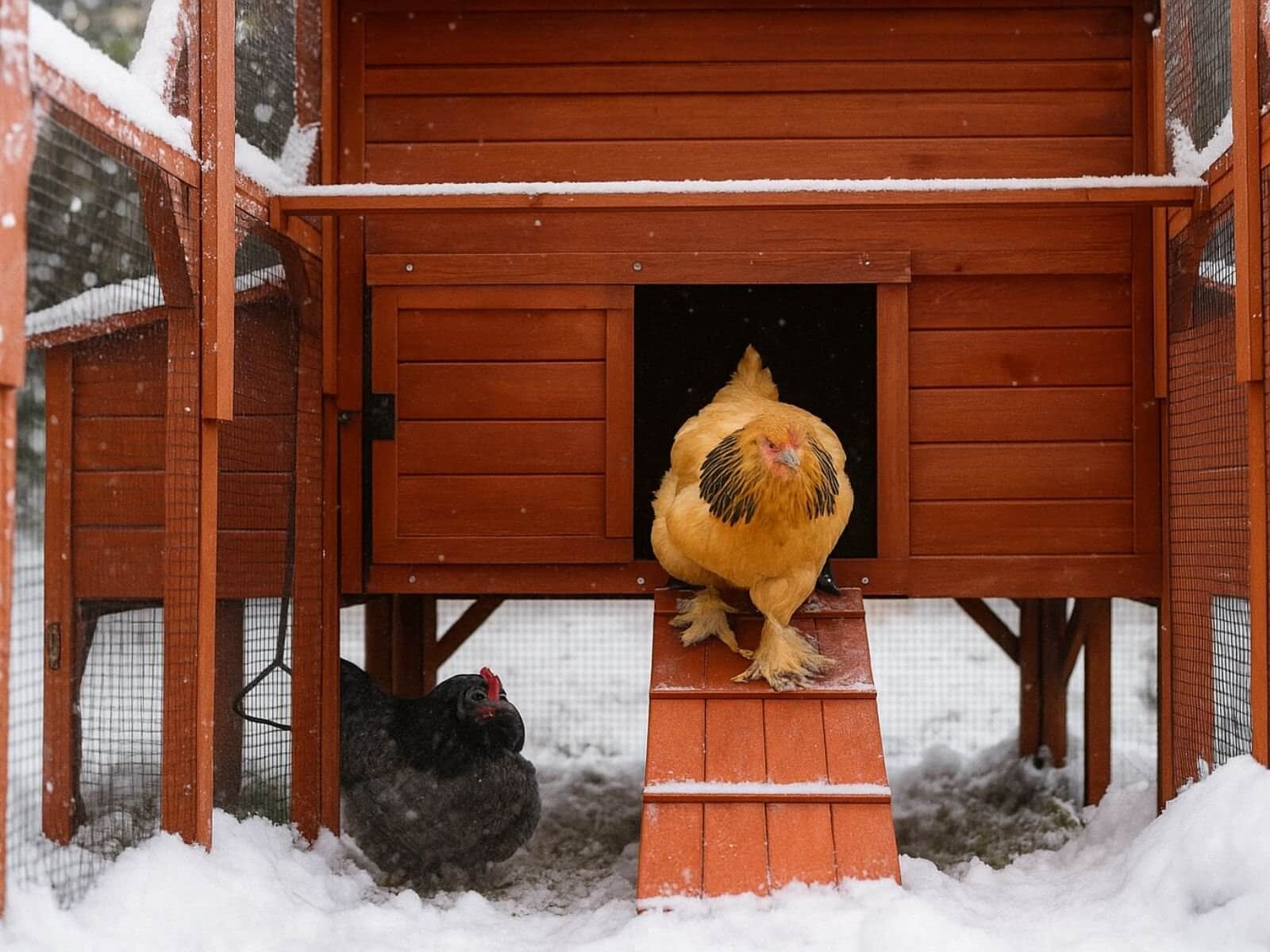
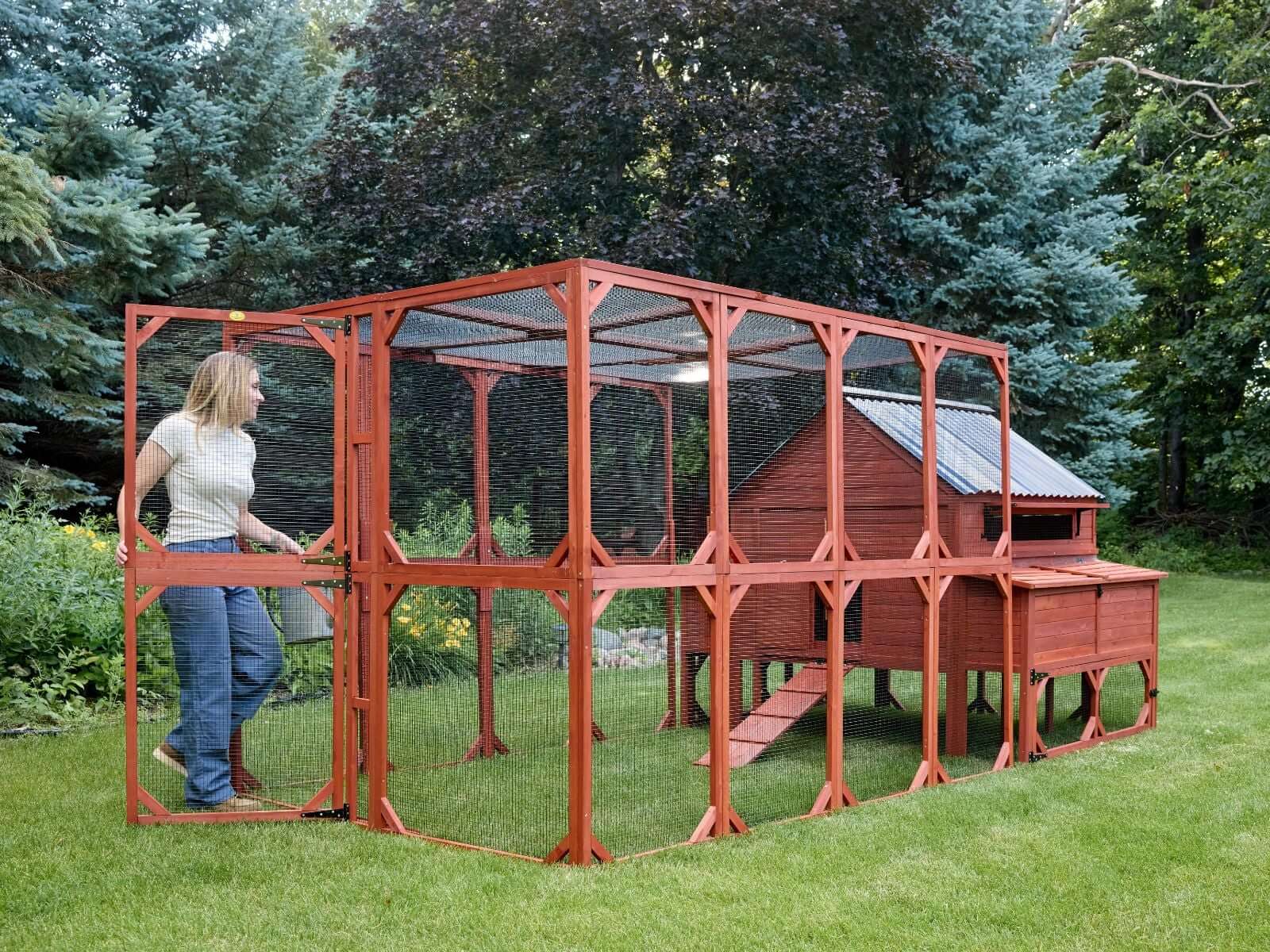
If you're planning a bigger flock or want plenty of room to grow, the Brahma Coop is our largest option. With eight nesting boxes, six roosting bars, and a spacious interior, it's designed for chicken keepers who need more room for their birds.
Pair it with one of our walk-in runs for additional outdoor space and easier access when caring for your flock. It's a great option for homesteaders, larger backyard flocks, or anyone who knows chicken math will eventually catch up with them!
All four options are designed to make getting started with backyard chickens more approachable, whether you're raising your first flock or upgrading your current setup.
Is It Cheaper to Build or Buy a Chicken Coop?
Counting your time, buying is cheaper.
If you only compare materials, building can come in under a kit’s price, especially for larger coops, or if you already own the tools and have reclaimed lumber.
But most keepers buy everything new and build it themselves. Then the math flips. For a six-hen coop and run, DIY materials cost $520 to $1,040, and the build takes another 10 to 24 hours. Our Orpington Lodge with run is $999, ships free and goes together in an afternoon. With your time counted, buying saves about $650 and 14 hours.
Building makes sense if woodworking is your hobby and you want a fully custom design. For everyone else, a quality chicken coop kit gets your flock into a safe, predator-proof home faster and for less.
Buying vs. Building: Which Is Right for You?
If you love building, build, and use ½-inch hardware cloth and solid latches. If you’d rather spend your weekends with your flock than at the hardware store, a kit is the smarter investment.
Some chicken keepers love designing and building their own coops. Others would rather skip the construction process and start enjoying their flock sooner.
Both approaches can work.
What's important is choosing a coop that provides adequate space, ventilation, weather protection, and security for your chickens.
If you decide to build, take the time to plan carefully and invest in quality materials, particularly when it comes to predator protection.
And if you'd rather leave the design and construction details to us, we're here to make that process easier.
At Chicken Coop Company, we've put the work into designing coops that are practical for chickens and the people caring for them.
Because the best part of backyard chicken keeping should be the chickens, not the construction project.
FAQs
How much does it cost to build a chicken coop?
For a backyard flock of 4 to 10 chickens, DIY materials for a coop and attached run cost about $420 to $1,360 in 2026, not counting tools. Add 8 to 30 hours of build time depending on size.
Is it cheaper to build or buy a chicken coop?
Counting your time, buying is cheaper. Our kits cost $549 to $1,499 with free shipping and assemble in 1 to 3 hours. With your time valued at $60 an hour, buying saves about $650 to $800 and 10 to 20 hours compared with building.
How much does it cost to build a chicken coop for 6 chickens?
DIY materials for a six-hen coop and run cost about $520 to $1,040, plus 10 to 24 hours of work. Our Orpington Lodge with run is $999, ships free, and assembles in 2 to 3 hours. That’s about $650 and 14 hours less once your time is counted.
What is the most expensive part of building a chicken coop?
Lumber, siding, and roofing are typically among the largest expenses when building a chicken coop. Predator-resistant hardware cloth, secure latches, and other hardware can also add to the total. When calculating how much does it cost to build a chicken coop, it's important to include these smaller materials because they can significantly affect your final budget. Lumber, siding and roofing alone run about $300 to $600 for a six-hen coop. Hardware cloth costs $50 to $70 per 50-foot roll, and many builds need two.
How long does it take to build a chicken coop?
8 to 30 hours depending on size, or 10 to 24 hours for a six-hen coop with a run. That’s usually one to four weekends. Our kits take 1 to 3 hours with a power screwdriver.
Is a chicken coop kit worth it?
For most keepers, yes. A quality kit costs about the same as DIY materials for small flocks, arrives with the hardware cloth installed, and saves a weekend or more of building.
Do you need a permit to build a chicken coop?
It depends on your city and county. Many areas allow small backyard coops without a permit but set limits on flock size and distance from property lines. Check with your local zoning office before you build or buy.