
Table of Contents
Chicken Coop Cleaning Checklist: What to Clean & When
Keeping chickens is one of the most rewarding hobbies, but like any animal, they rely on a clean environment to stay healthy and productive. We all know that chicken coop cleaning may not be the most exciting part of chicken keeping, but having a routine makes the job much easier and prevents small messes from becoming big problems.
The good news is that your coop doesn't need a complete deep clean every weekend. Instead, breaking your routine into manageable daily, weekly, and monthly tasks helps keep your flock healthy while saving you time in the long run. A few minutes each day can reduce odors, discourage pests, keep eggs cleaner, and create a more comfortable environment for your chickens.
Whether you're caring for a small backyard flock or a larger group of hens, this chicken coop cleaning checklist will help you stay organized and know exactly what needs attention and when.
Why Regular Coop Cleaning Matters
A clean coop is about much more than appearance. Chickens spend a large portion of their day eating, drinking, laying eggs, and resting inside their coop. As droppings, feathers, dust, and moisture build up, so do bacteria, parasites, mold, and ammonia.
Poor coop hygiene can contribute to:
- Dirty eggs
- Increased flies and pests
- Respiratory issues from ammonia buildup
- Wet bedding that encourages bacteria and mold
- Rodent activity
- Parasites such as mites and lice
Following a consistent chicken coop cleaning checklist helps prevent many of these issues before they become larger problems. It also makes every cleaning session quicker because you're maintaining the coop instead of starting from scratch each time.
Every coop and flock is different. The number of chickens you have, your bedding choice, weather conditions, and whether your chickens free-range will all affect how often you clean. Think of this guide as a flexible routine that you can adjust based on your flock's needs.
Daily Chicken Coop Cleaning Checklist
Daily cleaning doesn't have to take long. In fact, most of these tasks can be completed in less than ten minutes while you're already checking on your chickens.
Collect Eggs
Collecting eggs at least once each day helps keep them clean and reduces the chance they'll become cracked or dirty.
Leaving eggs in nesting boxes for long periods can encourage hens to continue laying in crowded boxes or accidentally step on eggs. During hot weather, collecting eggs more frequently also helps maintain egg quality.
If you notice dirty eggs becoming common, it may be a sign that your nesting boxes need fresh bedding or that hens are sleeping in them overnight.
Refresh Water
Fresh water is one of the most important parts of chicken care, especially during warm weather.
Empty dirty water, rinse the waterer if necessary, and refill it with clean water every day. Chickens often scratch bedding, dirt, and feed into their water, making it dirty much faster than many new chicken keepers expect.
Take a quick look inside the waterer each day for algae, slime, or debris. A quick rinse now prevents a much bigger cleaning job later.
Check Feeders
While you're refreshing water, inspect your feeders.
Remove any wet or moldy feed before topping it off. Moisture can quickly spoil feed and attract insects or rodents.
Also take a moment to look around the feeder for excessive spilled feed. Cleaning it up each day helps discourage mice, rats, and other unwanted visitors from making your coop home.
Observe Your Flock
One of the easiest ways to identify health issues early is simply watching your chickens.
As part of your daily routine, notice whether everyone is active, eating, drinking, and behaving normally.
Pay attention to:
- Drooping wings
- Limping
- Pale combs
- Labored breathing
- Isolation from the flock
- Dirty feathers around the vent
Many illnesses become much easier to manage when caught early, and daily observation is often your first clue that something isn't right.
Weekly Chicken Coop Cleaning Checklist
Weekly maintenance focuses on removing buildup before it becomes difficult to manage. Depending on your flock size, these tasks may take anywhere from 20 minutes to an hour.
Remove Droppings
Chicken droppings accumulate quickly, especially beneath roosting bars where chickens spend the night.
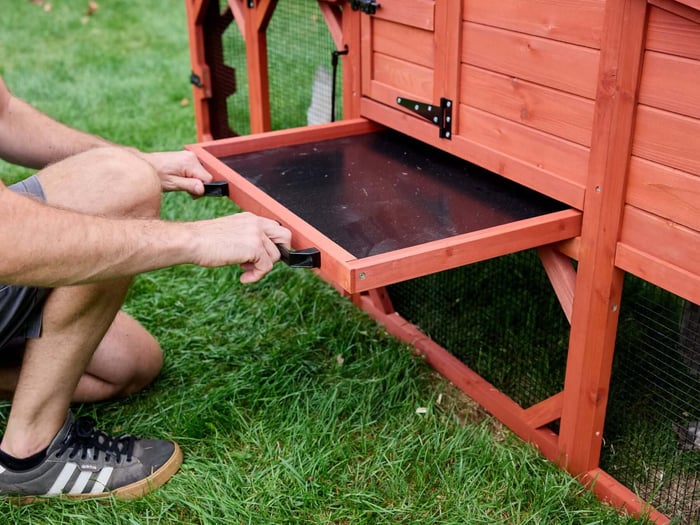
If your coop includes droppings trays or boards, empty and clean them each week. If not, remove excessive manure buildup from the coop floor before adding fresh bedding.
Keeping droppings under control helps reduce odors, flies, and ammonia while making future deep cleans much easier.
Refresh Bedding
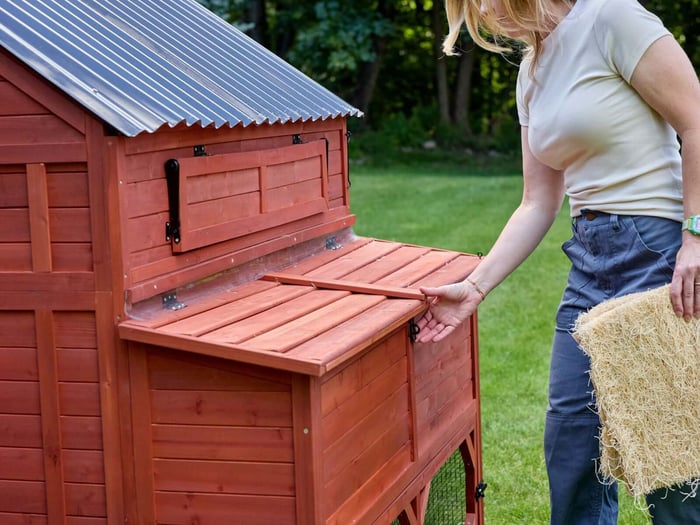
Even if you don't completely replace bedding every week, adding fresh bedding helps absorb moisture and keeps your coop smelling cleaner.
Pay special attention to:
- Nesting boxes
- Areas beneath roosts
- High-traffic entrances
Wet bedding should always be removed rather than simply covered with new material.
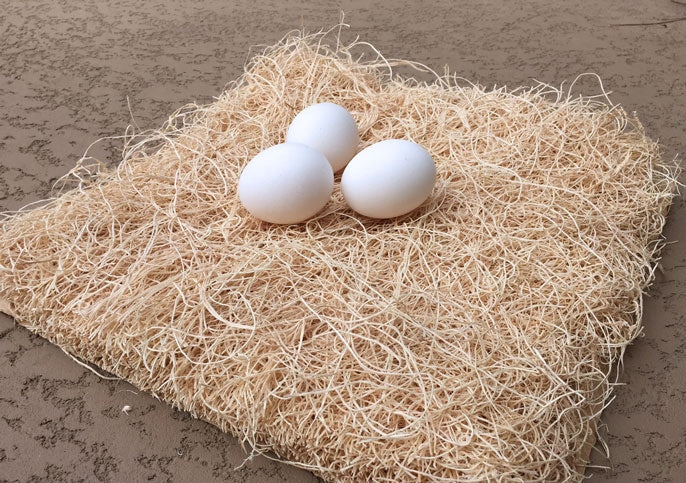
Many chicken keepers use pine shavings, hemp bedding, or chopped straw because they absorb moisture well and are easy to refresh throughout the week. This refresh also includes their nesting pads, so don't forget to replace those every month.
Natural Excelsior Aspen Fiber Nesting Pads | 13 x 13 Inches | Pack of 10
$ 34.99
Chicken Nesting Pads by My Favorite Chicken The eggs are on top, clean and fresh rather than having to hunt and dig for eggs as with some other bedding or shaving products. They also draw moisture from droppings which drop… read more
Wash Feeders and Waterers
While you rinse waterers daily, once a week is a good time to give both feeders and waterers a more thorough cleaning.
Wash them using warm water and a poultry-safe cleaner or mild soap before rinsing thoroughly.
This helps prevent algae, bacteria, and biofilm from building up over time.
Don't forget to inspect them for cracks or damage that could make cleaning more difficult or harbor bacteria.
Clean Nesting Boxes
Fresh nesting boxes encourage cleaner eggs and happier hens.
Remove soiled bedding, feathers, broken eggs, and any droppings that may have accumulated.
Replace bedding with fresh material to provide a comfortable place for hens to lay.
If you notice chickens consistently sleeping in the nesting boxes overnight, it may be worth checking whether your roosting bars are positioned correctly.
Inspect for Pests
Your weekly cleaning routine is the perfect opportunity to look for signs of unwanted visitors.
Check for:
- Mites around roosts
- Lice on feathers
- Rodent droppings
- Fly larvae
- Ant nests
Finding these problems early is much easier than dealing with a full infestation later.
Monthly Chicken Coop Cleaning Checklist
While daily and weekly maintenance keep your coop in good shape, a monthly deep clean helps tackle the areas that are easy to overlook. These tasks help extend the life of your coop, improve your chickens' living environment, and make routine cleaning easier throughout the year.
The exact schedule will depend on your flock size, bedding system, and climate, but setting aside time once a month for a more thorough inspection is well worth the effort.
Deep Clean the Coop
A monthly deep clean is the foundation of any chicken coop cleaning checklist.
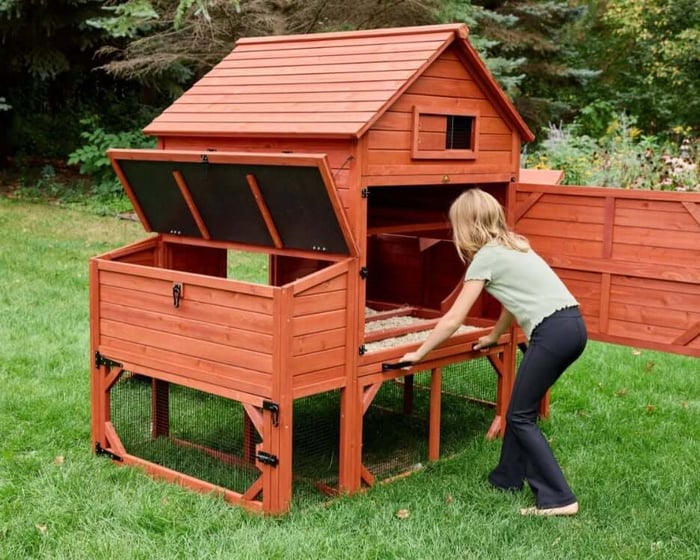
Start by removing all bedding from the coop. Sweep out loose feathers, dust, cobwebs, and debris before scrubbing surfaces as needed. Nesting boxes, roosting bars, walls, and floors can all benefit from an occasional wash, especially if droppings have accumulated in hard-to-reach places. If there is an area with some build-up, the coop poop buster works wonders!
Allow the coop to dry completely before adding fresh bedding. A dry coop helps reduce moisture, bacteria, and odors while creating a healthier environment for your flock.
Dust Off Ventilation
Many chicken keepers think about ventilation only during the summer, but good airflow is important all year long. If you haven't noticed, chickens naturally create a lot of dust! Between scratching in the run, taking dust baths, shedding feathers, and kicking up bedding, that dust can build up inside the coop over time.
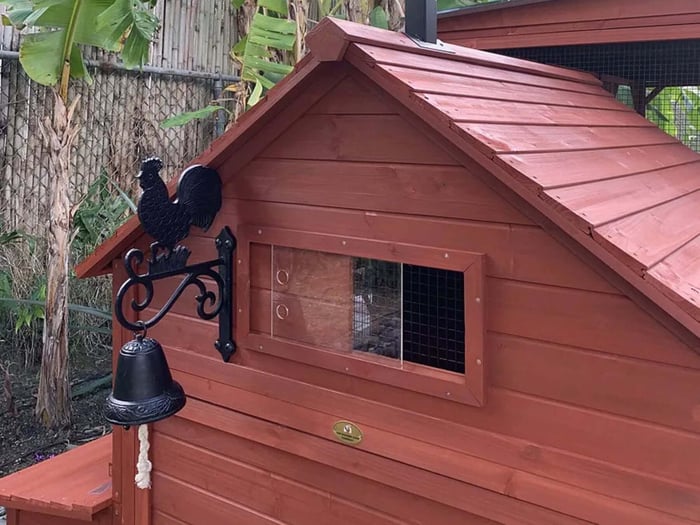
As part of your monthly routine, check that your coop's vents are free of dust, cobwebs, feathers, or nesting material that could restrict airflow.
Proper ventilation allows moisture, dust, and ammonia to escape while reducing condensation inside the coop. Good airflow helps keep bedding drier, improves air quality, and supports your flock's respiratory health, especially during the colder months when chickens spend more time inside.
Inspect Your Coop For Minor Changes
Your monthly cleaning routine is also a great time to give your coop a thorough inspection. While you're cleaning, take a few extra minutes to look over the entire structure for signs of minor wear and tear that may need attention before it gets any worse.
Thinks like for loose screws, damaged latches, warped wood, or roofing that may have shifted over time. Open and close doors to make sure they still latch securely, and inspect hinges and handles for any signs of wear. It's also worth looking for areas where moisture may be collecting or where pests may be starting to make themselves at home.
Taking care of small repairs as you notice them helps extend the life of your coop, keeps it safe for your flock, and can prevent more expensive repairs in the future.
Test Your Automatic Coop Door
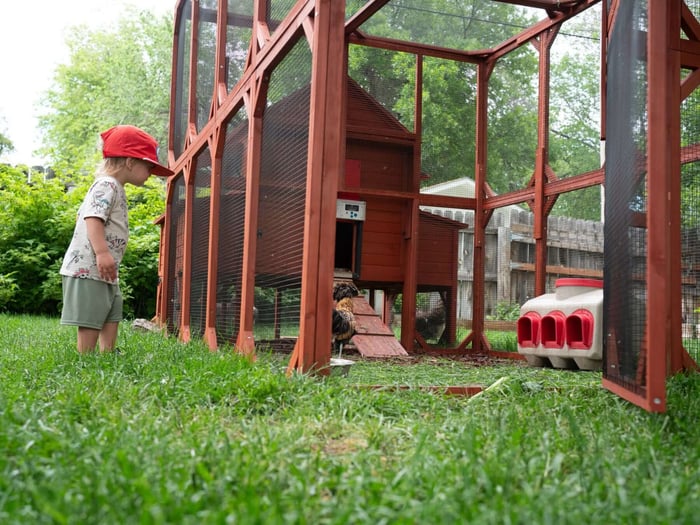
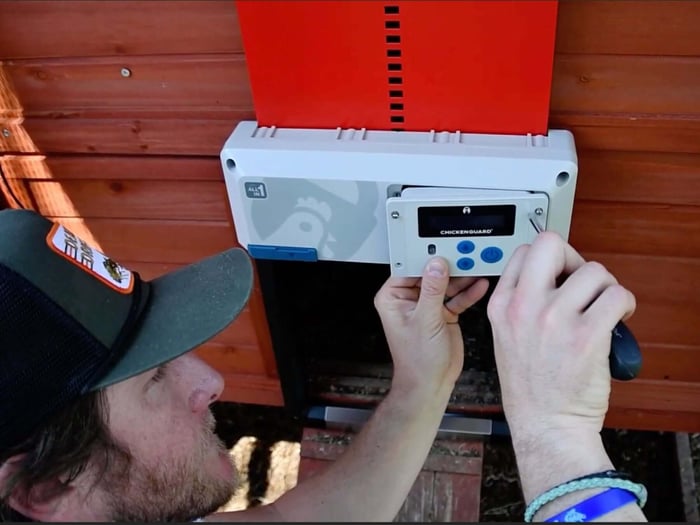
If you use an automatic coop door, don't wait until it fails to discover there's a problem. Make it a habit to test the door regularly, ensuring it opens and closes properly. As you do, listen for any unusual sounds, check that the door moves smoothly, and remove any debris that could interfere with its operation.
While many automatic coop doors can go up to six months between battery changes, we recommend checking the batteries every two to three months. It's a simple task that provides peace of mind and can help prevent the unpleasant surprise of discovering your coop door didn't close overnight.
Seasonal Coop Maintenance
In addition to your regular chicken coop cleaning checklist, there are a few bigger maintenance tasks worth tackling throughout the year.
- Refresh your chickens' dust bath by removing damp or dirty material and adding fresh sand, dirt, or your preferred dust bath mix.
- Prepare your coop for the next season. Before summer, make sure your coop has plenty of ventilation and shade. Before winter, inspect for drafts, ensure ventilation is still adequate, and make any weatherproofing updates your climate requires.
- Re-stain or reseal your coop once a year to help protect the wood from moisture, sun exposure, and everyday wear, extending the life of your investment.
- Inspect the entire coop for wear and tear. Look for loose hardware, damaged roofing, warped wood, cracked caulking, or any repairs that could become bigger problems if left unattended.
- Walk the perimeter of your coop and run to check for signs of digging, damaged hardware cloth, or new gaps that predators could use to gain access.
These larger maintenance projects don't need to happen often, but they can help extend the life of your coop while making routine cleaning easier.
Create a Routine That Works for You
No two chicken keepers have exactly the same setup or routines. So keep in mind that the goal isn't perfection, it's consistency.
A flock of four hens in a spacious coop may require less frequent cleaning than a larger flock housed in a smaller space. Weather, bedding choices, and how much time your chickens spend free-ranging will also influence how quickly your coop becomes dirty.
Following a simple chicken coop cleaning checklist allows you to spread the work throughout the week instead of facing an overwhelming deep clean every few months.
Many experienced chicken keepers find that daily tasks take less than ten minutes, weekly cleaning takes less than an hour, and monthly deep cleaning becomes much easier because the coop has been maintained all along.
The more consistent your routine becomes, the cleaner your eggs will be, the healthier your flock will stay, and the more enjoyable chicken keeping becomes.
Keep it Simple!
Keeping your coop clean doesn't have to be complicated. By dividing your routine into daily, weekly, and monthly tasks, you'll spend less time tackling major messes and more time enjoying your flock.
This chicken coop cleaning checklist is designed to help you stay organized while creating a healthier environment for your chickens year-round. Whether you're just getting started with backyard chickens or have cared for a flock for years, a consistent cleaning routine is one of the best investments you can make in your birds' health and happiness.
Save this guide or bookmark it for future reference. Having a simple routine makes caring for your flock easier every day of the year.
FAQs
How often should I clean my chicken coop?
Most chicken keepers benefit from following a routine that includes small daily tasks, weekly maintenance, and a monthly deep clean. However, the ideal schedule depends on flock size, bedding type, weather conditions, and the size of your coop.
What happens if I don't clean my chicken coop regularly?
A dirty coop can lead to unpleasant odors, ammonia buildup, dirty eggs, wet bedding, flies, rodents, parasites, and an increased risk of illness. Following a consistent chicken coop cleaning checklist helps prevent these problems before they become serious.
Do I need to disinfect my chicken coop every time I clean it?
No. Routine cleaning usually involves removing droppings, replacing bedding, and cleaning feeders and waterers. Disinfecting is generally only necessary after illness, parasite outbreaks, or during occasional deep cleans.
What's the best bedding for keeping a chicken coop clean?
Pine shavings, hemp bedding, and chopped straw are all popular options because they absorb moisture well and are easy to replace. The best choice depends on your climate, cleaning routine, and personal preference.
Can I use household cleaners inside my chicken coop?
It's best to avoid harsh chemicals that may leave harmful residues or strong odors. When cleaning your coop, use warm water, mild soap when appropriate, or poultry-safe cleaning products (like the coop-poop buster!), and always allow surfaces to dry completely before returning your chickens.