 Keeping Chickens Healthy in Winter: Simple Tips For Every Flock
Cold weather changes almost everything about daily chicken care. Shorter days, freezing temperatures, snow, and muddy conditions all introduce challenges that don’t exist during warmer months. Even experienced chicken keepers can be caught off guard by how quickly winter conditions affect their flock if routines are not adjusted.
Keeping chickens healthy in winter is not about overhauling your entire setup or adding unnecessary stress to your daily chores. It is about understanding how winter impacts chickens differently than summer and making thoughtful, seasonal adjustments that support their health. Chickens are naturally resilient animals, but cold weather can magnify small problems if they are ignored.
The good news is that a few consistent habits can go a long way. Nutrition, cleanliness, airflow, foot care, and hydration are the main areas that deserve extra attention during colder months. These five tips focus on practical ways to protect your flock and help them stay comfortable, healthy, and ready for spring.
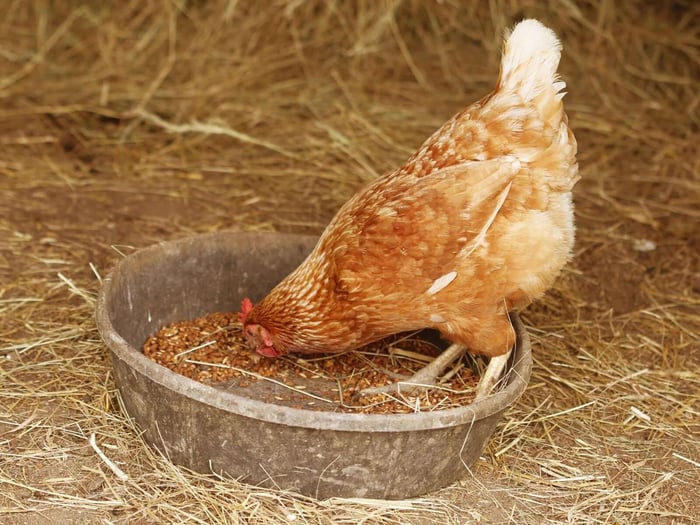
1. Support Their Diet With Supplements, Protein, and Calcium
One of the first things many chicken keepers notice in winter is a slowdown or complete stop in egg production. This is normal and largely driven by reduced daylight. However, one of the most common mistakes people make when keeping chickens healthy in winter is assuming that hens need less nutritional support just because eggs are no longer showing up in the nesting boxes.
Add more Protein: Most often, winter often increases a chicken’s energy demands. Birds burn more calories simply trying to maintain body heat, especially in colder climates. Offering additional protein can help support muscle maintenance, feather condition, and immune function during this time. Protein-rich treats should still be given in moderation, but they can be especially helpful when temperatures drop.
Keep up wit the Calcium! Calcium is another critical nutrient that should not be removed in winter. Even when hens are not laying, calcium supports bone strength and overall health. Removing calcium sources entirely can leave hens depleted when egg production resumes in spring. Free-choice oyster shell or crushed eggshells should remain available throughout the winter months.
Balanced nutrition plays a key role in keeping chickens healthy in winter because it strengthens the flock from the inside out. Well-fed chickens are better able to regulate their body temperature, fight off illness, and recover from seasonal stress.
2. Clean the Coop Regularly (If You Aren’t Using Deep Litter Method)
Cleanliness inside the coop becomes even more important in winter, especially if you are not using the deep litter method. Moisture builds up faster during colder months due to snow-covered feet, condensation, and spilled water. If left unchecked, damp bedding can quickly turn into a health issue.
Wet or compacted bedding creates the perfect environment for ammonia buildup. High ammonia levels can irritate chickens’ eyes and respiratory systems, making them more vulnerable to illness. When keeping chickens healthy in winter, maintaining a dry coop is often more important than keeping it warm.
Regular cleaning does not have to mean stripping the coop down to bare floors every week. Removing visibly wet bedding, refreshing nesting areas, and keeping droppings under control can make a big difference. Adding a coop refresh or deodorizing product after cleaning can help absorb moisture and keep odors manageable between full clean-outs.
A dry, clean coop supports respiratory health, foot health, and overall comfort. When chickens have a clean place to roost at night, they are better protected from the stressors that winter brings.
Coop Recuperate

$ 49.99
Coop Recuperate: Fresh & Dry Coop Recuperate™ by Strong Animals is a safe and natural poultry coop refresher designed to improve the comfort and cleanliness of your flock’s living environment. Its unique formula features organic ingredients that effectively reduce odor… read more
3. Maintain Airflow and Watch for Frostbite
Ventilation is one of the most misunderstood aspects of winter chicken care. Many people assume that sealing up the coop completely will keep chickens warmer, but this can actually create more problems than it solves. When keeping chickens healthy in winter, airflow is essential.
Chickens release moisture through breathing and droppings, and that moisture has to go somewhere. Without proper ventilation, it builds up inside the coop, leading to damp conditions that increase the risk of frostbite and respiratory issues. Cold air itself is not the biggest threat. Moist air trapped inside the coop is.
Good winter ventilation allows warm, moist air to escape while keeping drafts away from roosting birds. Vents placed higher in the coop work best, as warm air naturally rises. This creates airflow without chilling the flock.
Frostbite is another concern during extremely cold weather. Combs and wattles are most vulnerable, especially in breeds with larger combs. Regularly checking your flock for discoloration, pale tips, or darkened areas can help you catch frostbite early. Dry bedding, proper airflow, and protection from wind all help reduce risk.
Balancing ventilation and warmth is a key part of keeping chickens healthy in winter and one that often improves flock comfort more than additional insulation alone.
4. Check Those Chicken Feet
Feet are one of the most overlooked areas of chicken health during winter, yet they are also one of the most vulnerable. Frozen ground, ice, and mud can all cause discomfort or injury if not addressed promptly. Making foot checks part of your routine is an important step in keeping chickens healthy in winter.
Mud can harden between toes and restrict movement, while prolonged exposure to cold, wet conditions can lead to frostbite or sores. Chickens that spend time standing in icy or muddy runs are especially at risk. Even birds that appear healthy overall may be quietly dealing with foot pain.
Regularly observing how your chickens walk and stand can give you early clues that something is wrong. Swelling, limping, or reluctance to move are signs that warrant closer inspection. Keeping the run as dry as possible with straw, wood chips, or other absorbent materials can greatly reduce foot-related issues.
Inside the coop, clean and dry bedding supports foot health and provides insulation from cold floors. Healthy feet allow chickens to move comfortably, forage when possible, and maintain good circulation during winter.
5. Most Important: Access to Fresh Water
Water is one of the easiest things to overlook in winter and one of the fastest ways chickens can get into trouble. Frozen waterers, tipped bowls, or delayed refills can leave chickens without access to water longer than you might realize. Consistent hydration is critical when keeping chickens healthy in winter.
Even though chickens may drink less in cold weather, water is still essential for digestion, circulation, and temperature regulation. Dehydration can lead to reduced appetite, lethargy, and increased susceptibility to illness. Checking water sources multiple times a day during freezing temperatures helps prevent issues before they start.
You can also add in electrolytes during periods of extreme cold or stress. Poultry-safe electrolytes added occasionally to drinking water can help support hydration and recovery. They should be used as a temporary support, not a daily replacement for plain water. Chickens should always have access to fresh, clean water without additives.
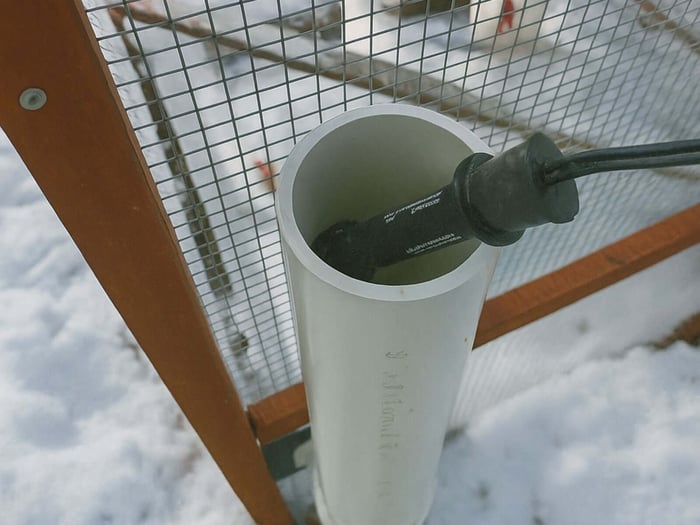
Reliable access to unfrozen water is one of the most impactful steps you can take toward keeping chickens healthy in winter, especially during prolonged cold spells. We offer a water heater that I personally use in the winter months, but there are plenty of options to keep their water from freezing!
Water Heater for Chicken Waterer

$ 29.99
The Chicken Coop Company water heater by Heto is a fully submersible water heater. It provides 100 watts of heating power to keep the water flowing for your flock. The heater can be placed vertically into your waterer as shown… read more
One More Tip: Covered Room to Roam
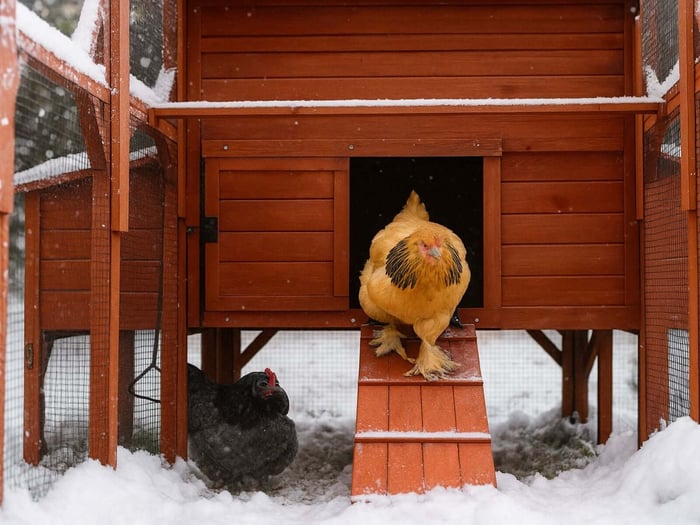
Most backyard flocks already have a run or designated area where their chickens spend time during the day. In winter, the challenge is not creating space but making that space usable when snow, ice, and wind take over. One important part of keeping chickens healthy in winter is making sure they still have a dry, protected place to move around.
Snow-covered ground and freezing rain can limit a chicken’s willingness to leave the coop, even if they normally enjoy their run. When birds are confined for long periods, boredom and stress can increase. Adding weather protection to an existing run gives chickens the confidence to stay active throughout the winter.
Storm panels, clear plastic sheeting, or heavy-duty tarps can be used to block wind and blowing snow along the sides of a run. These materials help create a warmer, calmer environment without fully enclosing the space. It is important to leave airflow at the top of the run so moisture can escape and fresh air can circulate.
A covered area also helps keep the ground beneath it drier. Dry footing reduces the risk of frostbite and foot issues while giving chickens something to scratch and explore. Even partial coverage can dramatically improve how often chickens use their run during winter.
Providing covered room to roam allows your flock to maintain normal behaviors while staying protected from the worst winter conditions, which plays an important role in keeping chickens healthy in winter without overcomplicating your setup.
Storm Panel Winter Protection Set For Coops and Runs

$ 325.99
Are you ready to keep winter out and happy chickens in? Don’t leave your feathered friends to fend for themselves when winter rolls in. Meet the Chicken Coop Storm Panels, your ultimate defense against Mother Nature. Crafted with high-quality, impact… read more
If you want, I can also:
Lightly weave this into one of the existing tips instead of a standalone section
Adjust the tone to be more product-forward or more neutral
Tighten it slightly if you’re worried about keyword count or length
Final Thoughts on Keeping Chickens Healthy in Winter
Winter chicken care does not have to be complicated or overwhelming. By focusing on nutrition, cleanliness, airflow, foot care, and hydration, you are addressing the most important factors that affect keeping chickens healthy in winter.
These habits help reduce stress on your flock and prevent small issues from turning into serious problems. Chickens that are comfortable and well cared for during winter are more likely to transition smoothly into spring, resume laying, and maintain strong overall health.
Observation is one of your best tools. Paying attention to changes in behavior, appetite, or movement allows you to respond quickly when something is off. With consistency and intention, keeping chickens healthy in winter becomes a manageable and rewarding part of seasonal flock care.