Table of Contents
Chicken predators are one of the biggest concerns for anyone raising a backyard flock. No matter how much you care for your chickens, there are always animals looking for an opportunity, and sometimes they're not the ones you'd expect. Most chicken keepers spend a lot of time preparing for obvious threats like foxes, raccoons, and hawks, but there are plenty of other predators that can put your flock at risk.
Unfortunately, I learned that lesson the hard way.
My name is Anne, and I run our marketing here at The Chicken Coop Company. I'm also out in my own backyard taking care of my flock every day. I love sharing what I've learned over the years, but this is one lesson I wish I hadn't had to learn myself.
This week, I made a mistake that cost me four chickens.
The batteries in my automatic coop door had died without me realizing it. Overnight, the door stayed open, leaving my flock exposed. A skunk got into the coop, and by the next morning, a fox had also taken advantage of the situation. I lost four of my hens.
So instead of pretending it didn't happen, I wanted to share what I learned.
This isn't a blog meant to scare you. It's a reminder that protecting your flock is an ongoing process, and that some of the most dangerous chicken predators aren't always the ones we expect. I hope my experience helps you avoid the same heartbreak and gives you a better understanding of the predators that may be lurking around your own coop.
The chicken predators we all know about
When someone asks about chicken predators, most of us immediately think of the usual suspects: foxes, raccoons, hawks, and coyotes. They're the predators we hear about most often, and for good reason. Foxes are smart enough to dig under fencing or find weak spots, raccoons can open simple latches and even reach through wire to grab chickens, hawks can swoop down on free-ranging birds in broad daylight, and coyotes are incredibly adaptable hunters.
Those are the predators I always had in the back of my mind. They were the ones I thought I needed to prepare for the most.
But after what happened to my flock, I realized I'd been overlooking another predator entirely.
The predator I underestimated
Before this happened, if you had asked me which predators I was most worried about, my answer would have been the same as most chicken keepers: foxes, raccoons, hawks, maybe even coyotes.
A skunk wouldn't have made my list.
To be honest, I didn't even realize they were such a threat to chickens. I knew they wandered through backyards and occasionally stole eggs, but I never considered them to be one of the predators I needed to actively protect my flock from. I may or may not blame the movie Bambi for giving skunks such a good reputation.
After doing more research and talking with other chicken keepers, I quickly realized how wrong I was. Skunks are opportunistic. They'll happily eat eggs, but if they have access to your flock, they can also injure or kill chickens. They're persistent, they're excellent diggers, and once they find an easy food source, they'll often come back.
I now realize that just because the "usual" predators weren't around didn't mean my flock wasn't at risk. Even though my door had been left open, I had still overlooked the predators that tend to fly under the radar. The egg-thirsty skunk.
The chicken predators you may not think about
After everything happened, I started thinking about all the other predators that don't get talked about nearly as much. Some of them surprised me, and a few were things I had never even considered until this year.
Skunks
The more I learned afterward, the more I realized how skunks are incredibly persistent animals. They're attracted to eggs, feed, insects, and rodents, and once they discover an easy food source, they're likely to return. If they find a way into your coop, they can do much more damage than many people realize.
Dogs and cats
Not every predator is a wild animal. Dogs are actually one of the most overlooked threats to backyard flocks. Even the friendliest family dog can switch into prey mode around chickens, and many attacks happen because of instinct rather than hunger.
Cats are a little different. Most house cats won't bother healthy adult hens, but chicks are much more vulnerable. Barn cats and feral cats can easily see young birds as prey if they're given the chance.
Crows
This was something we learned this year from our friend Sadie at @SimplyChicken. Many chicken keepers actually like having crows around because they're known to chase hawks away and alert other birds when predators are nearby.
However, Sadie shared something she learned the hard way. If a chicken is injured and bleeding, crows may see it as an opportunity and begin pecking at the bird. It's not a reason to chase every crow off your property, but it is a reminder that wildlife doesn't always fit neatly into "good" or "bad."
Weasels, mink, and snakes
Some of the smallest chicken predators can also be the easiest to overlook. Weasels and mink can squeeze through incredibly tiny openings and are capable of killing multiple chickens in one visit. Snakes may not target adult hens, but depending on where you live, they can become regular visitors if they discover your eggs or chicks.
A few reminders I wish I could tell my past self
If I could go back one week before everything happened, these are the reminders I'd leave myself.
- Check your automatic door batteries regularly.
- Don't rely on a single layer of protection if you can add an enclosed run.
- Walk around your coop often and look for signs of digging or damaged fencing.
- Lock feed away to avoid attracting unwanted visitors.
- If you notice predator activity nearby, take it seriously, even if nothing happened that day.
- Cameras can provide peace of mind and help identify what's visiting your coop. (& I highly recommend getting a solar-powered one!)
How to predator-proof your coop
No coop can promise protection against every possible situation, but a few simple habits can dramatically reduce the chances of losing your flock.
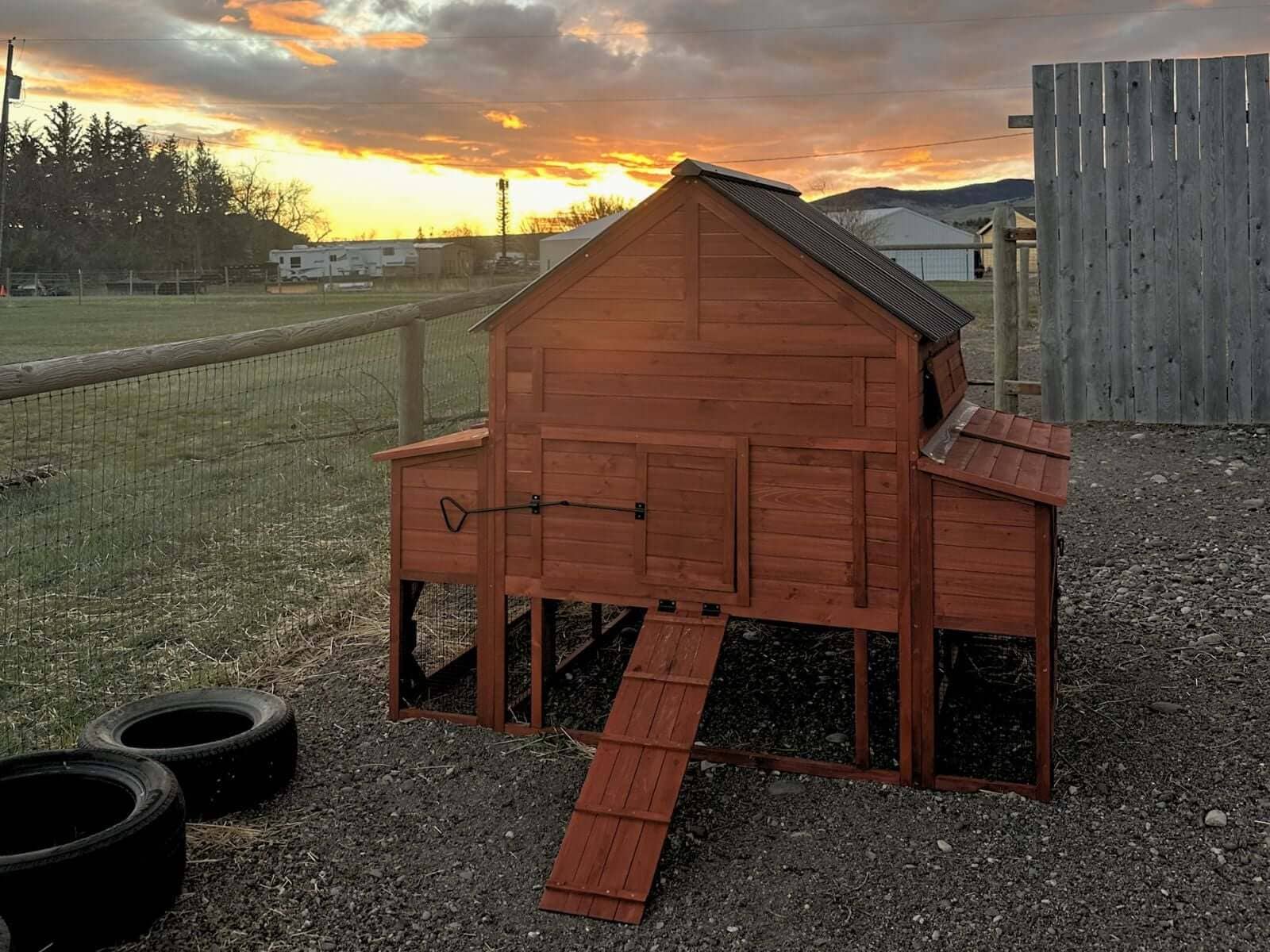
Choose secure construction with predator-resistant materials instead of lightweight wire that can easily be bent or torn. Make sure every door latches securely, and remember that raccoons can open surprisingly simple locks.
If your chickens free range during the day, provide places where they can quickly take cover from aerial predators like hawks. An enclosed run adds another layer of protection when you're away from home or can't supervise your flock.
Inspect your coop regularly for signs of digging around the perimeter, loose boards, gaps in fencing, or anything else that could become an entry point. Even small openings can give predators an opportunity to get in.
Foxes, coyotes, raccoons, and other predators may also try to dig beneath your run. Adding a Predator Protection Kit creates an additional barrier around the perimeter to help deter digging and add another layer of protection for your flock.
If you use an automatic coop door like I do, don't let it become something you forget about. Replace batteries on a schedule instead of waiting for them to die. That simple habit could save your flock. If you don't have an automatic chicken coop door, I highly recommend getting one. It can add another layer of protection by making sure your flock is closed in at night—even when your schedule gets busy!
Finally, don't assume predators only visit at night. Some of the most successful chicken predators hunt in broad daylight. Staying aware of what's happening around your property and reacting quickly when neighbors report predator sightings can make a huge difference.
One last thing
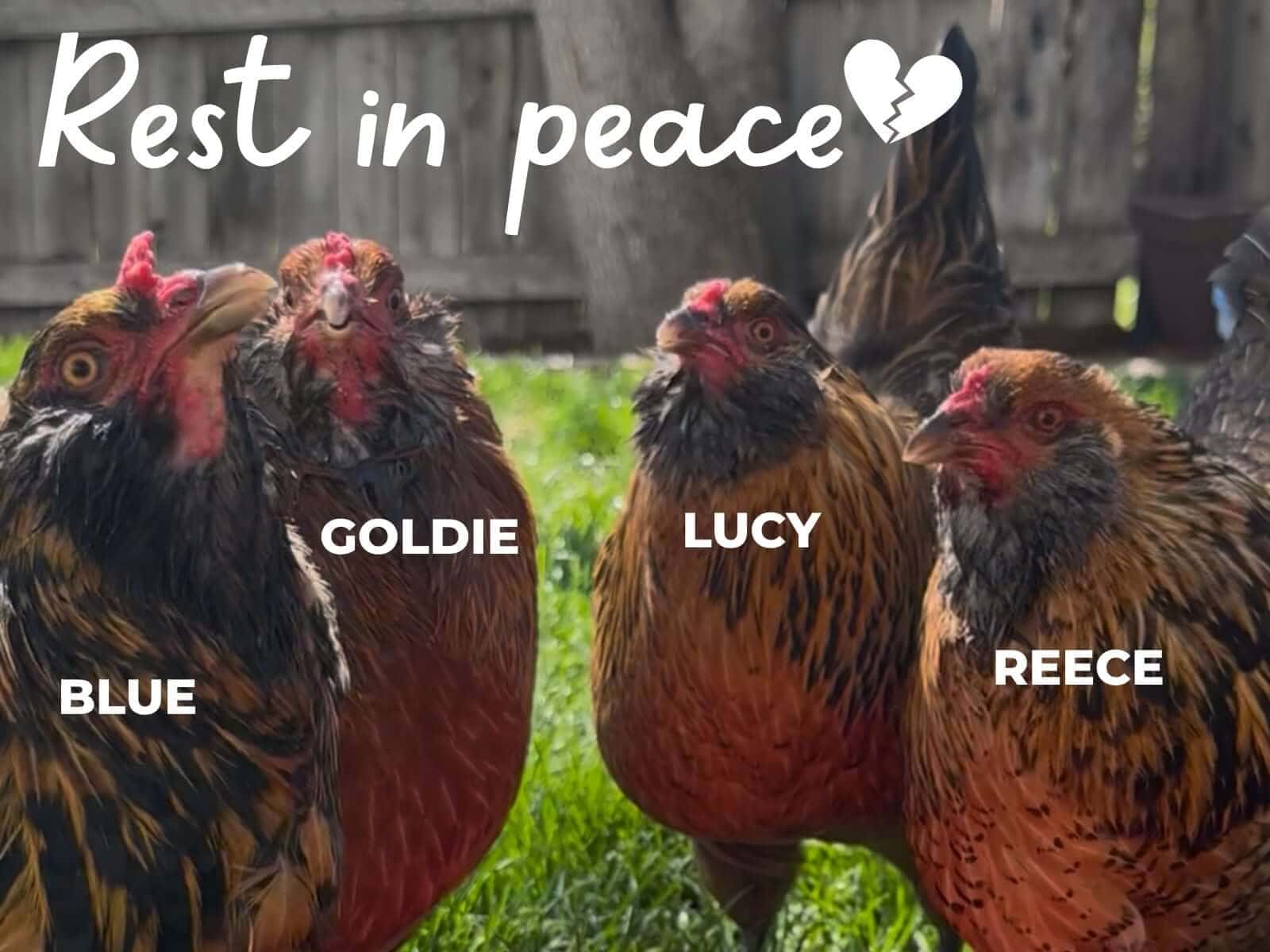
I wish this blog didn't have to exist. I wish I still had my four Easter Eggers; Lucy, Reece, Blue and Goldie.
But chicken predators are very real. So if sharing what happened helps even one person remember to check their coop batteries tonight, reinforce a weak spot in their fencing, or decide to add an enclosed run, then my girls will have helped protect another flock.
Chicken keeping is one of the most rewarding hobbies there is, but it's never perfect. We all make mistakes, even those of us who spend every day talking about chicken care.
Learn from mine.
Give your flock an extra hug tonight for me.
FAQs
What are the most common chicken predators?
Predators can be foxes, raccoons, hawks, coyotes, skunks, owls, weasels, mink, snakes, and even domestic dogs. Every area is different, so it's important to learn which predators are common where you live and take steps to protect your flock accordingly.
Do skunks attack chickens?
Yes. While skunks are often attracted to eggs, chicken feed, and insects, they can also attack chickens if they have access to the coop. They're opportunistic animals, which means they'll take advantage of an easy food source when given the chance.
How can I protect my chickens from predators?
A secure coop is your best defense against chicken predators. Use sturdy fencing, predator-proof latches, an enclosed run when possible, and check your coop regularly for signs of digging or damage. If you use an automatic coop door, replace the batteries on a routine schedule so it doesn't fail unexpectedly.
What should I do if I see a predator near my chicken coop?
Don't assume it was just passing through. If you spot a predator around your coop, inspect your fencing, doors, and latches for weak spots, make sure your chickens are securely locked up each night, and remove anything that could attract wildlife, such as spilled feed or accessible eggs. Catching a problem early can help prevent a future attack.