
Table of Contents
- Egg Prices Rising: What’s Really Happening
- What Causes Egg Prices Rising in the First Place?
- Could Egg Prices Rising Happen Again?
- Backyard Chickens: A Separate System Entirely
- The Real Cost Breakdown of a Small Flock
- It's Not Just About the Eggs
- Why Starting Before the Next Spike Matters
- What You Actually Need to Get Started
- Stability in an Unstable System
- FAQs
Quick answer
Egg prices are high in 2026 primarily due to ongoing HPAI (bird flu) outbreaks that have eliminated tens of millions of commercial hens from the supply chain — combined with rising feed costs and consumer demand, this has pushed retail egg prices to record highs in many markets. Backyard chickens are the most direct solution: a flock of 4–6 hens can supply a family with fresh eggs year-round at roughly $1–2 per dozen once the setup cost is amortized.
Egg Prices Rising: What’s Really Happening
If you have walked through the egg aisle anytime in the past few years, you have likely felt it. Even when shelves are full, prices are noticeably higher than they were just a short time ago. The headlines may fade in and out, but the pattern remains the same: egg prices rising, stabilizing briefly, then rising again.
For many families, eggs are not a luxury. They are a daily staple. Breakfast, baking, protein on a budget — eggs have always been one of the most affordable and versatile foods in the grocery store. So when egg prices rising becomes a recurring trend instead of a one-time event, it raises a bigger question:
Why does this keep happening?
And more importantly, what can you actually do about it?
Let’s take a closer look at what is driving egg prices rising across the country, why it could happen again, and how backyard chickens offer more than just eggs — they offer stability.
What Causes Egg Prices Rising in the First Place?
There is no single reason for egg prices rising. Instead, several factors work together to create spikes in cost.
1. Avian Influenza
The largest driver of recent egg price volatility has been highly pathogenic avian influenza (HPAI). According to the USDA, outbreaks in 2022 and 2023 led to the loss of over 58 million birds across commercial flocks. A significant portion of those birds were laying hens.
When millions of hens are removed from production, supply drops sharply. Demand, however, does not drop. Eggs are still a staple product. When supply decreases and demand stays steady, prices rise. It is simple economics.
Even when flocks are rebuilt, it takes time for production to stabilize. That lag contributes to continued egg prices rising even after the initial outbreak slows.
2. Feed Costs
Commercial egg production relies heavily on grain feed — primarily corn and soybeans. According to USDA Economic Research Service reports, feed accounts for up to 70 percent of the cost of raising commercial laying hens.
When global grain markets fluctuate due to drought, international conflict, transportation bottlenecks, or fuel costs, producers feel it immediately. Those costs pass directly to consumers. If feed prices rise, egg prices rising often follows.
3. Fuel and Transportation
Eggs are fragile, refrigerated products that require consistent transportation from farm to processor to distribution center to grocery store. When diesel fuel costs climb, so does the cost of shipping food.
The Bureau of Labor Statistics Consumer Price Index data shows that energy costs and food prices often move together. When transportation costs increase, it contributes to egg prices rising at retail.
4. Consolidated Production
Modern egg production is highly centralized. A relatively small number of very large operations produce the majority of eggs in the United States. While this system is efficient in stable conditions, it is vulnerable to disruption.
If one large facility is impacted by disease, natural disaster, or labor shortage, the ripple effects can be nationwide. That structural vulnerability means egg prices rising can happen quickly and spread broadly.
Could Egg Prices Rising Happen Again?
Yes. And that is not speculation — it is pattern recognition.
Avian influenza has become more seasonal and recurrent rather than isolated. Wild migratory birds continue to reintroduce the virus each year. The USDA continues to monitor outbreaks annually, and commercial producers rebuild flocks knowing that future outbreaks are possible.
Add in ongoing global supply chain volatility, fluctuating feed markets, and labor challenges, and the possibility of egg prices rising again is not far-fetched.
Even if prices are temporarily stable, the underlying vulnerabilities remain.
That does not mean panic is necessary. It does mean planning is wise.
Backyard Chickens: A Separate System Entirely
This is where backyard chickens change the conversation.
Backyard flocks operate outside of the commercial egg supply chain. They are not dependent on nationwide distribution networks. They are not tied to commodity egg pricing. They are not affected by the loss of millions of hens across the country.
When egg prices rising dominates the news cycle, backyard chicken keepers experience something very different: consistency.
A small flock of four hens can produce approximately 800 to 1,000 eggs per year combined. That is roughly 65 to 80 dozen eggs annually. For many households, that covers most or all egg consumption.
Even if you purchase quality layer feed at $25 per 50-pound bag, monthly feed costs for four hens typically fall between $25 and $40 depending on local prices. That breaks down to well under grocery store retail pricing per dozen, especially during periods of egg prices rising.
More importantly, the price does not fluctuate weekly based on national headlines.
The Real Cost Breakdown of a Small Flock
Let’s look at the numbers more clearly.
Upfront Investment
Quality coop and run: varies widely depending on size and construction
Four to six chicks: relatively inexpensive
Brooder supplies and feeder/waterer setup
Yes, there is an initial investment. A well-built coop is not free. But it is also not a one-year product. A quality coop can last many years with minimal maintenance.
When you spread that investment over five to ten years of egg production, the long-term math becomes far more favorable — especially during repeated periods of egg prices rising.
Ongoing Costs
Feed
Occasional bedding
Minimal healthcare or supplements
Compared to fluctuating grocery prices, these costs are steady and predictable.
When you compare five years of purchasing eggs during recurring cycles of egg prices rising versus five years of home production, many families find that backyard chickens pay for themselves faster than expected.
It's Not Just About the Eggs
If this were only about money, backyard chicken keeping would still be compelling. But it is about much more than economics.
Food Transparency
When you collect eggs from your own hens, you know exactly how they were raised, what they ate, and how fresh your food is. There is no mystery.
Nutritional Quality
Several studies have shown that pasture-raised eggs often contain higher levels of omega-3 fatty acids and certain vitamins compared to conventional eggs. While commercial standards vary, many backyard flocks have access to diverse forage that can enhance nutritional value.
Waste Reduction
Kitchen scraps that might otherwise be discarded can be safely fed to hens in moderation. Chickens convert food waste into protein and compostable manure, closing a small but meaningful sustainability loop.
Garden Benefits
Chicken manure, when composted properly, becomes a powerful soil amendment. That is an added value grocery store eggs simply cannot provide.
Family Impact
Children who gather eggs develop a different understanding of food systems. Responsibility, routine, and connection to animals are intangible benefits that go beyond price comparisons.
Even when egg prices rising is no longer dominating headlines, these benefits remain.
Why Starting Before the Next Spike Matters
The time to build resilience is not during a shortage.
When egg prices rising hits national news, hatcheries sell out quickly. Feed stores experience surges in chick demand. Coop inventory tightens. Waiting until the next spike begins means competing with thousands of other families reacting at the same time.
Starting a flock during stable periods allows you to plan thoughtfully. Spring remains the ideal time to begin. Chicks are widely available, temperatures are manageable for brooding, and hens started in spring typically begin laying before winter.
If egg prices rising happens again next year, you will not be scrambling. You will be collecting.
What You Actually Need to Get Started
The essentials are straightforward:
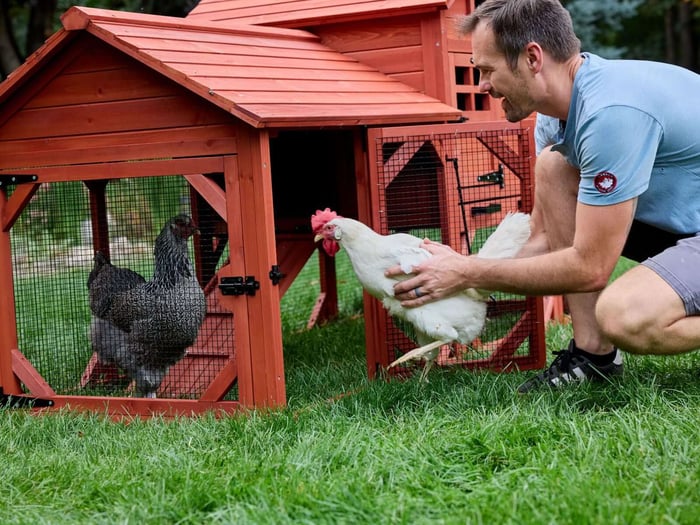
A secure, predator-resistant coop sized appropriately for your flock
Proper ventilation
Nest boxes and roost bars
Starter feed and clean water
A brooder setup for chicks
The most common regret among new chicken keepers is purchasing a coop that is too small or poorly constructed. Undersized coops create ventilation issues, cleaning challenges, and stress within the flock.
Investing in a well-designed, durable coop upfront reduces long-term frustration and protects your birds from predators and weather extremes.
Daily care once hens are established typically takes 10 to 15 minutes.
That small routine creates a consistent return — not just in eggs, but in independence.
Stability in an Unstable System
No one can predict exactly when egg prices rising will dominate the news again. But recent years have shown that volatility in food pricing is no longer rare.
Backyard chickens do not eliminate every grocery expense. They do not replace all protein sources. But they offer a layer of stability in a system that has proven fragile.
When commercial supply chains experience disruption, your backyard flock continues its quiet routine.
Four hens do not solve global economics. They do provide breakfast.
And for many families, that is reason enough.
FAQs
Why are egg prices rising again?
Egg prices rising is typically caused by avian influenza outbreaks, higher feed costs, transportation expenses, and supply chain disruptions that reduce commercial egg production.
How many chickens do I need to offset grocery egg costs?
Most families can significantly offset egg purchases with four to six hens, which can produce 800 to 1,200 eggs per year combined.
Are backyard chickens cheaper than buying eggs?
Over time, many families find that backyard chickens become cost-effective, especially during periods of egg prices rising. Upfront coop costs are balanced by years of egg production.
Does avian influenza affect backyard chickens?
While backyard flocks can be exposed, they are not part of the large-scale commercial system. Proper biosecurity and responsible management reduce risk.
How long does it take for hens to start laying eggs?
Most hens begin laying around 18 to 24 weeks of age. Chicks started in spring typically produce eggs before winter.