Table of Contents
- What Temperature Is Too Hot for Chickens?
- How to Keep Chickens Cool in Summer (Quick Answer)
- How Chickens Regulate Heat
- Early Warning Signs of Heat Stress
- The Ground Beneath Their Feet: Cooling From Below
- Hydration Is Non-Negotiable
- Coop Airflow: The Hidden Risk After Dark
- Summer Chicken Care Checklist (What Your Flock Needs in Hot Weather)
- Final Thoughts
- FAQs
If you're wondering how to keep chickens cool in summer, you're already ahead of most flock keepers. Heat stress in backyard chickens escalates fast, one warm week is all it takes to go from a thriving flock to hens showing signs of real distress. The good news is that most of it is preventable, and the setup is simpler than you'd think.
It starts with understanding something most chicken owners overlook: how your hens actually regulate their body temperature, and why that system has hard limits when the heat really hits.
What Temperature Is Too Hot for Chickens?
Before we get into how to keep chickens cool in summer, it helps to understand when heat becomes a real problem.
- 85°F → chickens begin to feel mild heat stress
- 90–95°F → high risk, especially for heavier breeds
- 100°F+ → dangerous without intervention
These thresholds matter because chickens don’t sweat. Once temperatures climb past what their bodies can handle, they rely entirely on their environment to cool down.
How to Keep Chickens Cool in Summer (Quick Answer)
Keep your chickens coop with these 5 things:
- Provide constant shade
- Offer multiple water sources
- Refill water 2–3 times daily
- Improve coop ventilation
- Create cool resting areas
How Chickens Regulate Heat
Chickens don't sweat. While humans shed body heat through millions of sweat glands, chickens have none. Instead, they rely on a combination of behavioral and physiological mechanisms to manage their internal temperature, and those mechanisms have real limits.
Panting is the primary cooling strategy. When a chicken opens her mouth and breathes rapidly, she's pushing warm air out and pulling cooler air in to lower internal body temperature through evaporative cooling from the respiratory tract. It works in mild heat. In prolonged or extreme heat, it doesn't work fast enough.
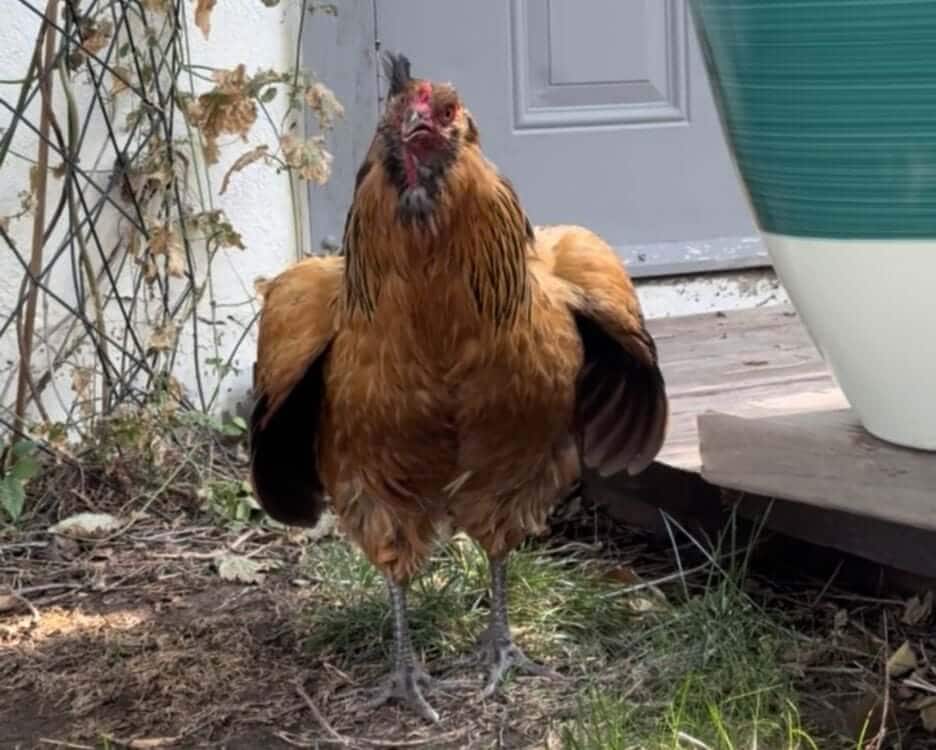
Wing spreading is another signal to know. When you see your hens holding their wings out and away from their body, they're trying to expose more skin surface area and release trapped heat. The feathered body is naturally insulating — fantastic in January, a liability in July. Spreading their wings is your flock telling you the thermostat is too high.
Reduced activity is their third lever. On hot days, chickens will naturally slow down, seek shade, and stop foraging. Movement generates metabolic heat, and when the environment is already working against them, stillness is the smart move.
The problem is that all three of these mechanisms have a ceiling. Once ambient temperatures push past 85°F, chickens begin to struggle. By 95°F, the risk of heat stress becomes serious for most breeds. For heavy, densely-feathered birds like Brahmas, Cochins, and Orpingtons, discomfort can start even earlier.
Understanding this biology matters because it changes how you prepare. You're not just making your chickens more comfortable — you're building support systems that extend what their bodies can do on their own.
Early Warning Signs of Heat Stress
Before you can keep chickens cool in summer effectively, you need to recognize the warning signs early. The window between "uncomfortable" and "in danger" can be narrow, especially during a heat wave.
Panting with an open beak is the most obvious sign. If one or two birds are doing it briefly on a warm afternoon, that's normal regulation. If the whole flock is panting and can't stop, that's a red flag.
Wings held out from the body indicates the birds are actively working to cool down. A hen standing with both wings drooped away from her sides in the shade is telling you she's struggling.
Lethargy and disengagement is easy to miss if you're not watching closely. A hen that's usually alert and curious who suddenly seems dull, slow, or unresponsive is showing early signs of heat stress.
Pale or discolored combs and wattles can signal reduced circulation as the body prioritizes keeping core temperature down. Normally bright red combs that look washed out or purple are cause for concern.
Reduced or stopped egg production is a downstream effect that often appears within a day or two of heat stress. If your reliable layers suddenly go quiet mid-summer, heat is often the culprit.
Reduced water consumption is a counterintuitive one — in severe heat stress, chickens can sometimes drink less even though they need more. If the waterer hasn't moved much on a scorching day, check on your birds.
The most important thing you can do with this list is act at the first sign, not the last.
The Ground Beneath Their Feet: Cooling From Below
One of the most underappreciated ways to keep chickens cool in summer isn't shade or fans, it's what's under their feet.
Chickens dissipate body heat through their feet and legs, which lack the insulating feather coverage that traps heat on the rest of their body. Giving them something cool to stand on can make a meaningful difference in how quickly they bring their temperature down.
Here's a simple technique that works surprisingly well: place a few bricks or flat stones in a shallow tray of ice water for 20 to 30 minutes. Once chilled, move them into the shade in the run. Your hens will find them on their own and stand or squat on the cold surface, using the contact point to pull heat out of their bodies.
Rotate the bricks back to the ice water as they warm up throughout the day to keep the effect going. It costs almost nothing and requires no power, just a little consistency.
Similarly, keeping the ground surface of the run cool helps. Wet down the dirt or deep litter during the hottest part of the afternoon. The evaporating moisture cools the surface your birds walk on, and in a well-ventilated space, that humidity can actually aid their panting-based cooling.
Hydration Is Non-Negotiable
A chicken's body is roughly 65% water. In hot weather, they can need two to four times their normal daily water intake to stay regulated. That means water access during summer isn't just a comfort item — it's a survival requirement.
A few principles to keep in mind as temperatures rise:
Cool water matters more than cold water. Ice cold water straight from the hose can cause digestive shock for birds that are already heat-stressed. Aim for cool and fresh, refreshed frequently and kept in the shade.
Multiple access points reduce competition. Dominant hens can block water access during a stressful situation. Two or more waterers ensure every bird can drink when she needs to.
Algae and bacteria grow faster in heat. Waterers that stay clean for two or three days in cooler weather can turn green and foul overnight in summer. Daily rinsing becomes non-negotiable.
Electrolyte supplementation helps during extreme heat. Adding a poultry-specific electrolyte powder during a heat wave replaces minerals lost through panting and supports overall hydration.
The easiest way to stay on top of all of this is to upgrade your water system before summer arrives. Manual waterers that require daily filling become a burden fast, and a skipped refill on a 95-degree day can put your flock at risk.
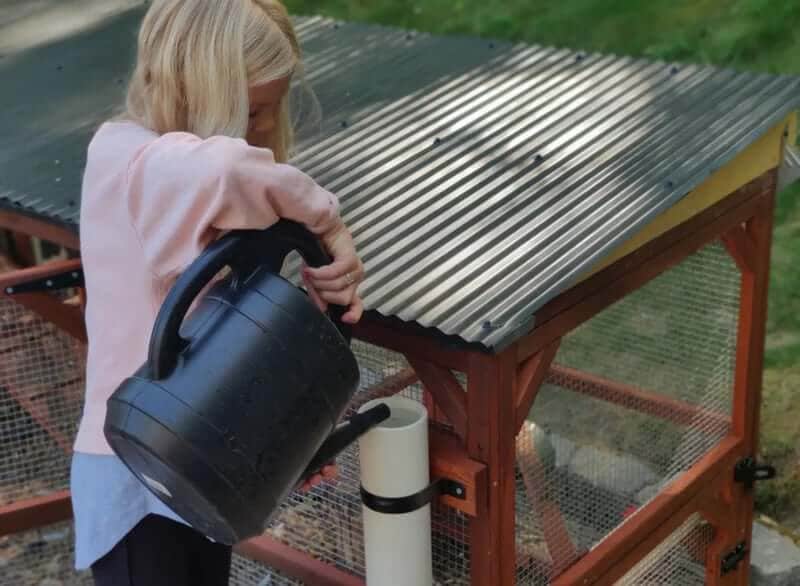
Our Thirsty Bird Continuous Chicken Waterer is purpose-built for this problem. It connects directly to your garden hose and uses an integrated float valve to automatically refill as your flock drinks — so the water is always available, always fresh, and you're never a forgotten chore away from a crisis. The enclosed PVC design with non-drip nipples keeps water clean and free of the dirt, algae, and waste contamination that open waterers collect in warm weather. For flocks up to 12 hens, it's the kind of upgrade that genuinely pulls weight all summer long.
If you prefer a manual option or want to browse what fits your setup, our full feeders and waterers collection has options for every flock size and configuration.
Coop Airflow: The Hidden Risk After Dark
Most backyard chicken keepers think about how to keep chickens cool in summer as a daytime problem — provide shade, check the water, maybe set up a fan. But here's what often goes unnoticed: the coop itself can retain heat long after the sun goes down, and chickens roosting in a stuffy, humid coop overnight are still under thermal stress even if the outside temperature has dropped.
A sealed, poorly-ventilated coop acts like an oven. It absorbs heat during the day and holds it through the night. Add the body heat of several birds roosting together and the moisture from their respiration, and you have a climate that keeps your flock stressed around the clock.
Ventilation is the answer, but the challenge with manual ventilation is that it requires you to be present to adjust it — propping windows open during the day, closing them at night, checking again when a heat wave returns. It's reactive by nature, and it depends on your schedule lining up with your flock's needs.
This is exactly the problem our Coop Climate Control System was designed to solve. It combines a quiet, durable ventilation fan with a precision temperature and humidity sensor and a smart controller that runs automatically based on thresholds you set. When the temperature inside the coop hits your trigger point, the fan activates. When it drops back down, the fan shuts off. You can monitor live readings and receive app notifications directly from your phone, and the data tracking feature shows exactly how your coop's climate trends over time.
It installs in about 30 to 45 minutes on any Chicken Coop Company model (except the Leghorn) and includes everything needed out of the box. For keepers who want peace of mind without being physically present for every temperature swing, it's the most direct upgrade you can make heading into summer.
Summer Chicken Care Checklist (What Your Flock Needs in Hot Weather)
As temperatures start climbing in spring, running through this list gives you a clean baseline before the real heat arrives:
Coop setup:Walk through the coop on a warm afternoon and feel for hot spots — especially near the roofline and in the nesting boxes. If it feels stuffy to you, it's worse for your birds. Add or clear vent openings and consider the Climate Control System if you want automated management.
Water system:Check every waterer for cracks, algae buildup, and proper positioning in the shade. Decide whether your current setup requires daily manual attention and whether that's realistic through a heat wave. Consider upgrading to the Thirsty Bird before the first hot stretch rather than scrambling after it.
Run and outdoor space:Identify shaded areas and expand them if needed using shade cloth, tarps, or a lean-to. The goal is to give birds a place to rest during the hottest hours of the afternoon (typically 2 to 5 PM) where they're completely out of direct sun.
Ground cooling options:Stage your chilled brick setup. Gather a few flat stones or bricks, find a shallow tray that fits three or four of them, and keep a plan for where ice comes from during a multi-day heat wave.
Know your warning signs:Talk through the signs of heat stress with anyone else who tends the flock. A family member or neighbor who checks on the birds while you're at work needs to know what open-beak panting, drooped wings, and pale combs mean — and what to do when they see them.
Final Thoughts
Knowing how to keep chickens cool in summer is ultimately about preparation, not reaction. Waiting until your hens are panting in August to think about ventilation, water access, and ground cooling puts you and your flock in a difficult position.
The biology is clear: chickens are not built to shed heat efficiently, and when their own mechanisms fall short, they need your help. Recognizing the early warning signs and building the right systems around your flock before the heat hits — that's the difference between a summer that worries you and one that doesn't.
Your flock depends on you to think ahead. Spring is the right time to do it.
FAQs
How early should I start thinking about how to keep chickens cool in summer?
Start in early to mid-spring, before the first consistent warm stretch. Setting up shade, checking ventilation, and upgrading your water system takes time, and doing it under pressure during a heat wave is harder than doing it proactively.
What temperature is dangerous for backyard chickens?
Chickens begin to experience heat stress at around 85°F, and risk increases significantly once temperatures reach 95°F or above. Humidity makes it worse — a hot, humid day is more dangerous than a dry day at the same temperature because panting becomes less effective at cooling the body.
How do I know if my chicken is overheated versus just warm?
A warm chicken will seek shade, slow down, and may spread her wings slightly. An overheating chicken will pant with an open mouth, hold wings fully out from the body, appear lethargic or disoriented, and may have a pale or discolored comb. The difference is urgency — a warm chicken is coping, an overheating chicken needs intervention.
How much water does a chicken drink in hot weather?
On a hot day, a laying hen can drink two to four times her normal amount — roughly a pint or more per bird per day. A flock of eight hens can go through a gallon of water or more on a single hot day. This is why automatic or continuous waterers are so valuable in the summer.
Does coop ventilation matter at night, or only during the day?
It matters around the clock. Coops that absorb heat during the day can remain dangerously warm through the night, especially when several birds are roosting together and generating body heat. Poor overnight ventilation means your flock never fully recovers between hot days, which compounds the stress.